What We Were So Glad We Had When Hurricane Helene Hit
This story includes affiliate links to gear we mention. As an Amazon Associate, Top 100 Preps earns from qualifying purchases. Read our disclosure.
The night the trees came down
We were never supposed to be in trouble during Hurricane Helene. We live on the side of a hill in the mountains outside Asheville. We weren't in a flood zone. So when the storm came, we went to bed like it was any other rainy night.
What we didn't think about was the three days of rain that came before it. By the time Helene arrived, the ground was soaked and soft. The trees had nothing left to hold on to.
Around two or three in the morning, we woke up to wind like we'd never heard. Then came the sound I'll never forget: a crack, then a boom. A tree going down. Then another. Then another, every minute or two, all around us.
We woke the kids and went down to the basement. It was pitch black. We couldn't see anything, so all we had was the sound. We heard our truck take a hit (it was totaled). Then we started hearing trees hit the house.
At some point I went upstairs and opened the door to look out. I didn't recognize anything. After that, we sort of surrendered. We stayed in the basement for hours, tried to sleep a little, and hoped a tree wouldn't come through the roof.
The morning after
We couldn't wait for the sun to come up so we could assess the damage.
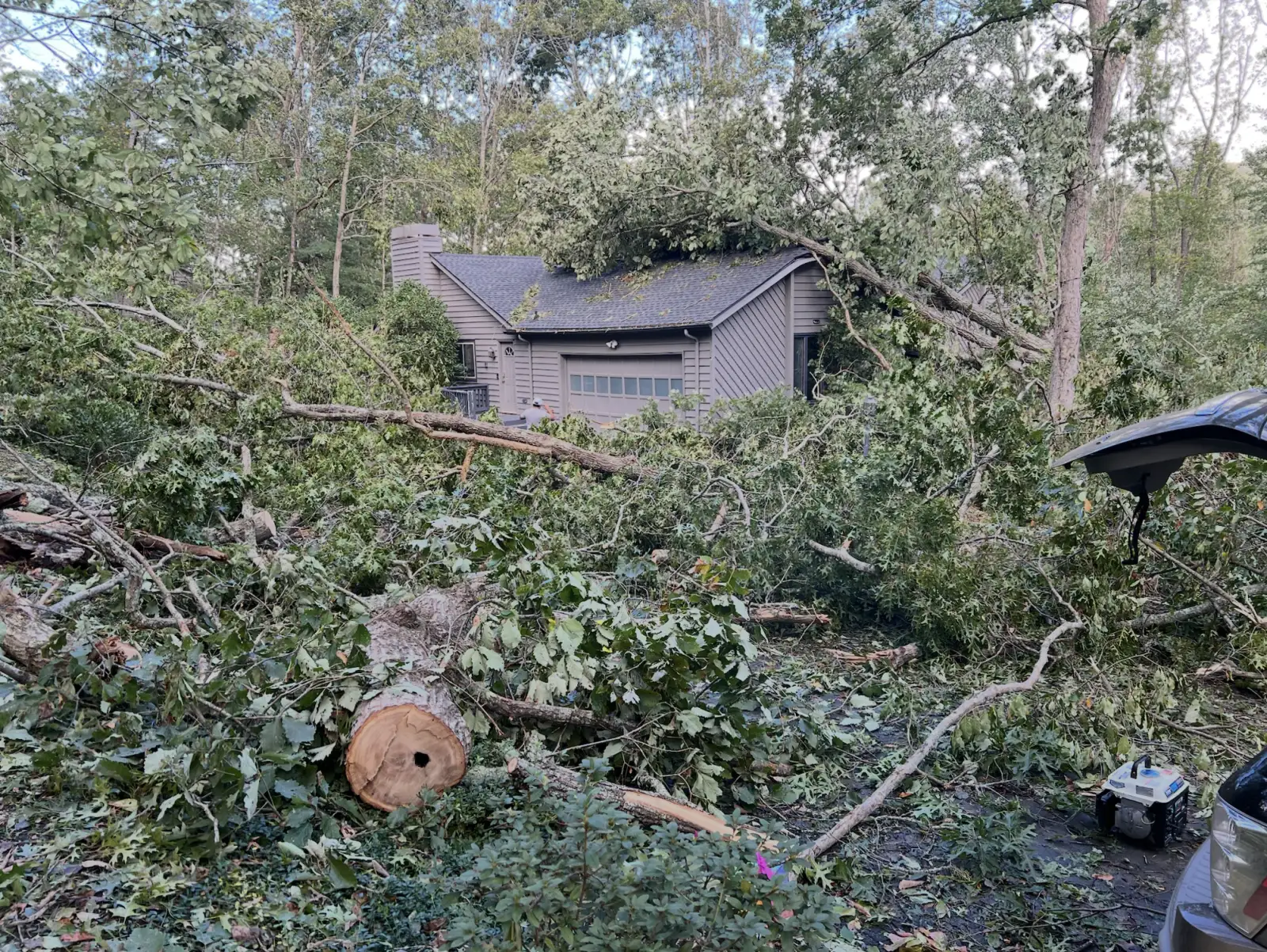
A feeling went through the core of me that I'd never felt before. Two words rang out in my head: natural disaster.
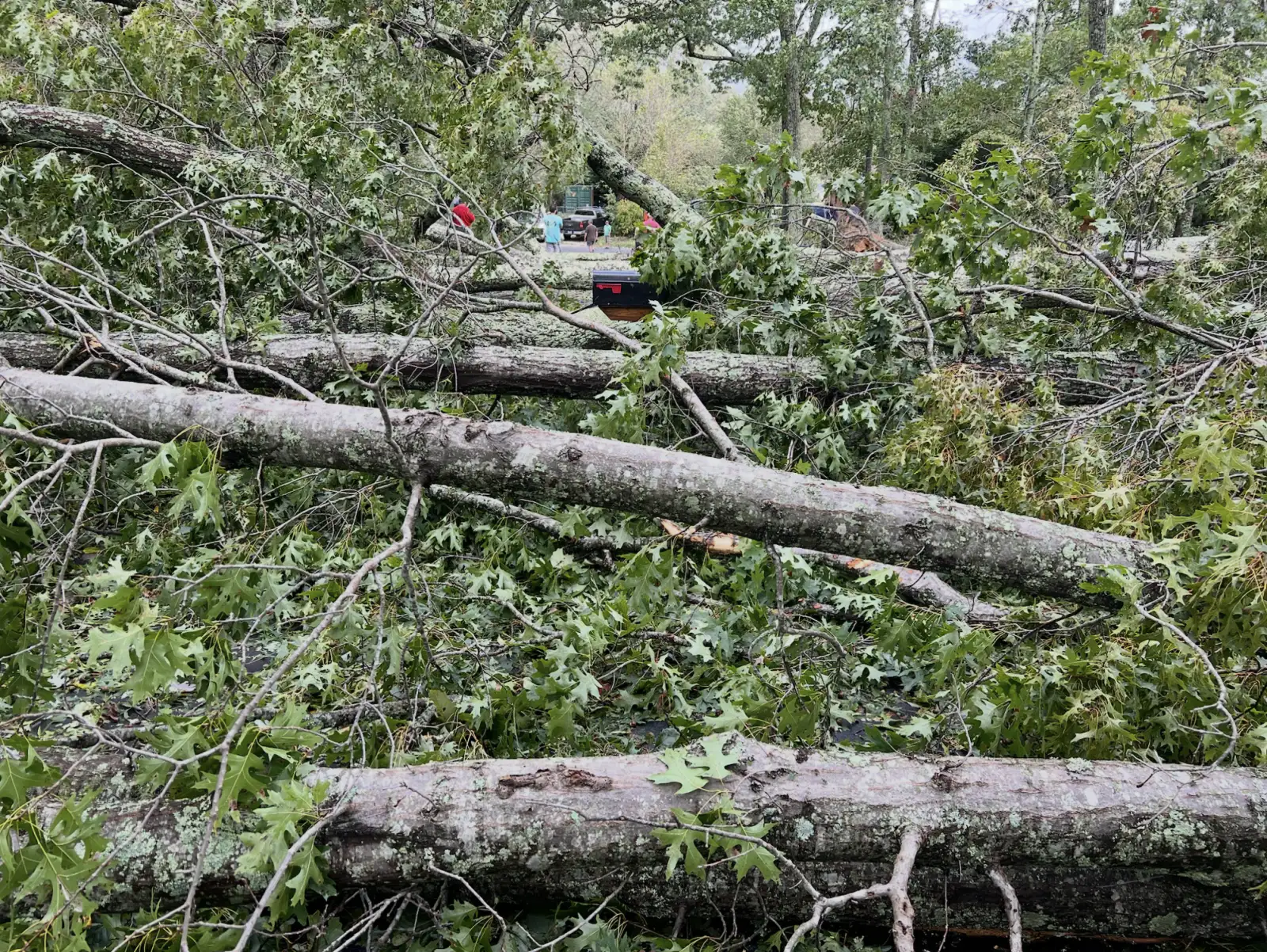
We couldn't see the driveway or tell where the road used to be. Trees were piled 20 feet high across the street. On our one acre alone, more than 40 trees were down.
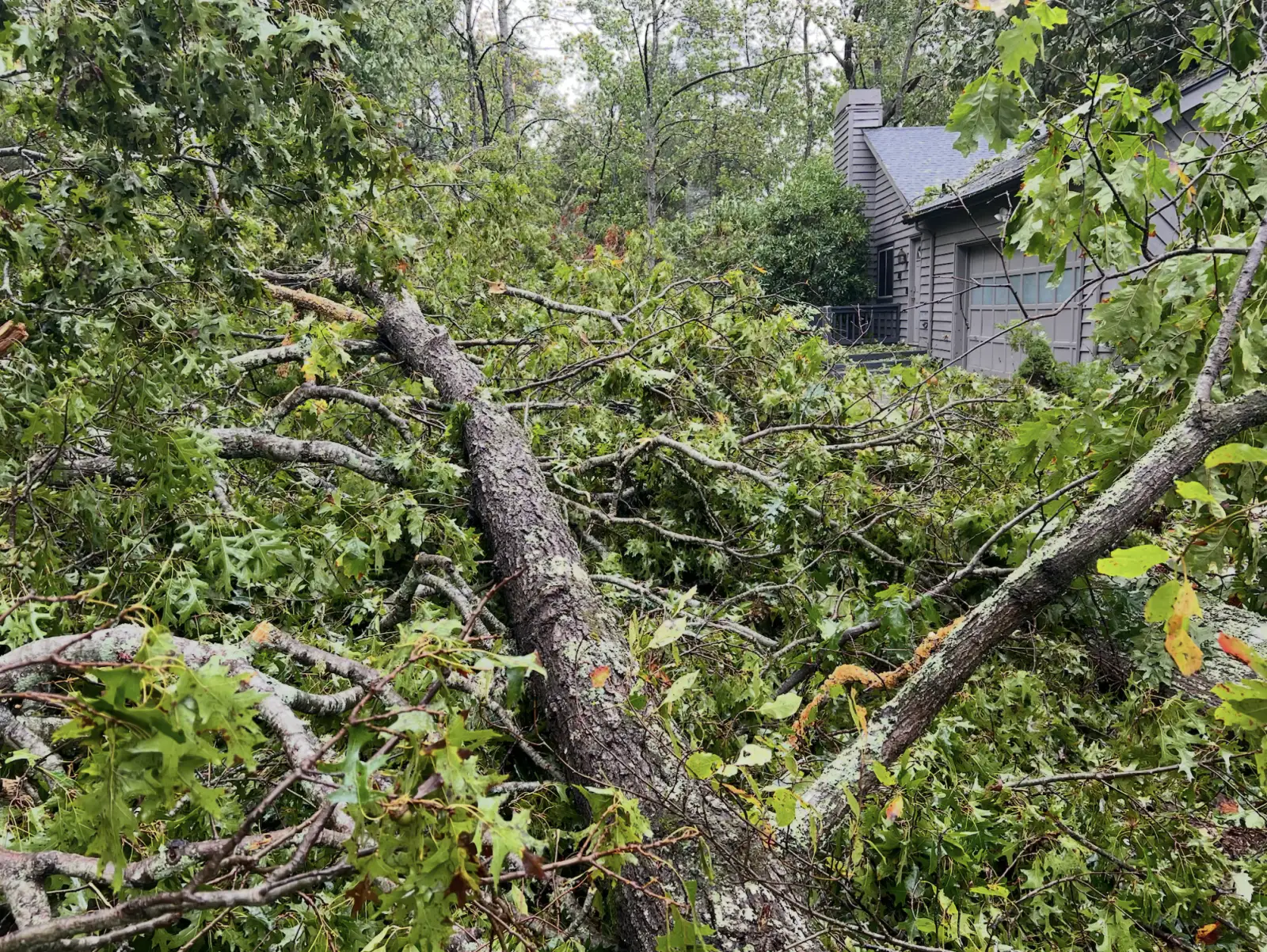
We'd been caught in one of the swaths that tore through the mountains that night. Some neighborhoods nearby barely lost a branch. In ours, every tree in the wind's path was laid down flat, all pointing the same direction. About half the houses around us took a tree. Some were leaning on the roof. Some came through living rooms, took out decks, or cut a house in two.
But even before the storm was over, we could hear chainsaws at the bottom of the road. Neighbors and Good Samaritans were already cutting their way in. By early afternoon, people were walking through each other's yards to check who was hurt. We had to dodge angry bees, because all those uprooted trees had ripped open underground nests. The kids came outside and tried to take it all in.
Then came the quiet part. No power, no water, no internet. For the next few weeks, we waited.
What we were so glad we had
We'd spent about two years putting our preps together. We always knew we'd need them someday. We just didn't know it would be that day. Here's what made the biggest difference.
A pantry full of dehydrated food
This was the big one. Once the roads were clear enough, friends started stopping by, and we traded off watching each other's kids. A lot of our friends were living on crackers and whatever snacks were left in the cupboard.
My parents were eating canned vegetables cold, straight out of the can. They were okay, but it made me even more grateful for what we had. And we had enough to share with them and with our friends.
When it was my turn to host, I could make real dinners. Dehydrated potato slices, corn, whatever we had. We even invented a dish we still make today: hurricane potatoes, Augason Farms dehydrated potato slices fried up on the stove. The kids loved them. In the middle of all that chaos, a hot, real meal felt like a small miracle.
Stored water
We had a lot of water stored in the basement, and we needed it. We didn't have running water for many weeks. To keep it safe, we boiled all of it on the stove, whether it was for drinking, cooking or washing up, and we made it last.
Propane and camp stoves
No power meant no kitchen. Propane and a couple of stoves meant we could still cook every meal, boil water, and keep everyone fed and warm.
Chainsaws and gasoline
With more than 40 trees down on our property and the road completely blocked, chainsaws weren't optional. Everyone who had one got to work, and that's how the paths got cut and the cars got out.
Half a tank of gas, always
Larry has one rule he drives home over and over: never let the cars drop below half a tank. We followed it, and it was a lifesaver. With the gas stations closed and no idea when they'd reopen, that half tank was what we had to check on family and get where we needed to go.
Ham radios
With no power, no internet and no cell service, we had no idea what was happening outside our street. My husband Larry pulled out his ham radios and started picking up signals from repeaters in the area. That was how we started learning what was going on. We didn't even hear about the flooding for another day or two.
Starlink
We didn't have regular internet for a couple of months. Starlink meant I could keep working from home, which meant a paycheck kept coming in while everything else was on hold.
Lanterns
The nights were long and very dark. Good lanterns made the house feel livable after sunset, especially for the kids.
Extra cat food
We have two cats, and we were very lucky to have extra cat food stocked up. Running out would have been one more problem to solve. When everything else is upside down, keeping your pets fed and happy is one less heartbreak to deal with. Don't forget the animals in your preps.
A first aid kit
Cleanup is when people get hurt. I was pushing a big section of log out of our driveway when I slipped on wet leaves and cut my chin pretty badly. We heard plenty of stories about other injuries around us too, at a time when getting to a doctor wasn't easy. It was a relief to have the basic medical supplies on hand to take care of it ourselves.
Friends we could count on
The most important thing we had wasn't in the pantry. It was our community. It would have been a really lonely time without a few friends we could count on. They made all the difference, both for our morale and for getting the actual work done.
The guys teamed up and went from house to house. They'd spend a whole day cutting through one family's driveway so they could get out, then move on to the next. We did the same with the kids. We traded them back and forth, so they were always busy, happy and fed, and the parents got a break.
No amount of gear replaces people. If you're prepping, get to know your neighbors and build a few friendships you can lean on, and that can lean on you.
Inconvenient, but never in trouble
It was hard. It was a real emergency. But here's the thing I keep coming back to: I never felt like we were actually in trouble. A lot of people around us were, and my heart broke for them.
We had enough to hunker down and wait it out. Even better, we had enough to share. We brought things over to neighbors and fed our friends' kids. That peace of mind is the real reason to prep. It's not about fear. It's about being the house that's okay, and being able to help the people around you.
We didn't get everything right, though. In the next post, I'll share the things I wish we'd had in our preps when Helene hit.
Part 2 of our Helene storyWhat I Wish We'd Had in Our Preps for Hurricane Helene →